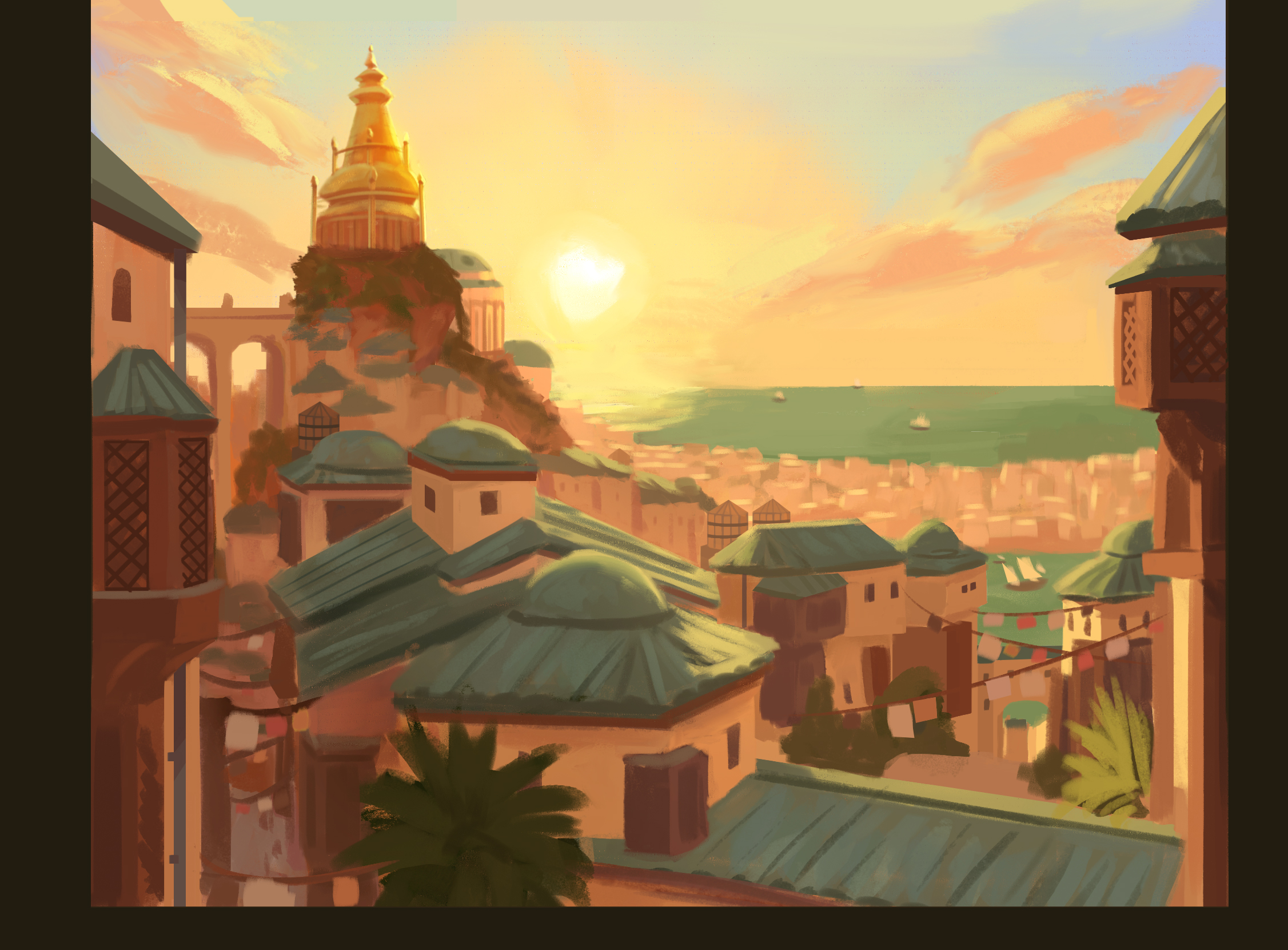
“Atop this red pillar we stand glistening in Dawns light, breaking the ground for a grand beacon that will illuminate the eastern world thrice over. May its circles bring infinite splendor upon our realm.”
-Lightkeeper Marakan, founder of the 9th Beacon.
Cohv is one of the “great cities” of Siltria, most known throughout Hovehko as the home of the 9th Shintaric Beacon, and thus is considered to be the spiritual and cultural capital of Siltria, even if no longer the political capital of the province.
Contents
Cohv
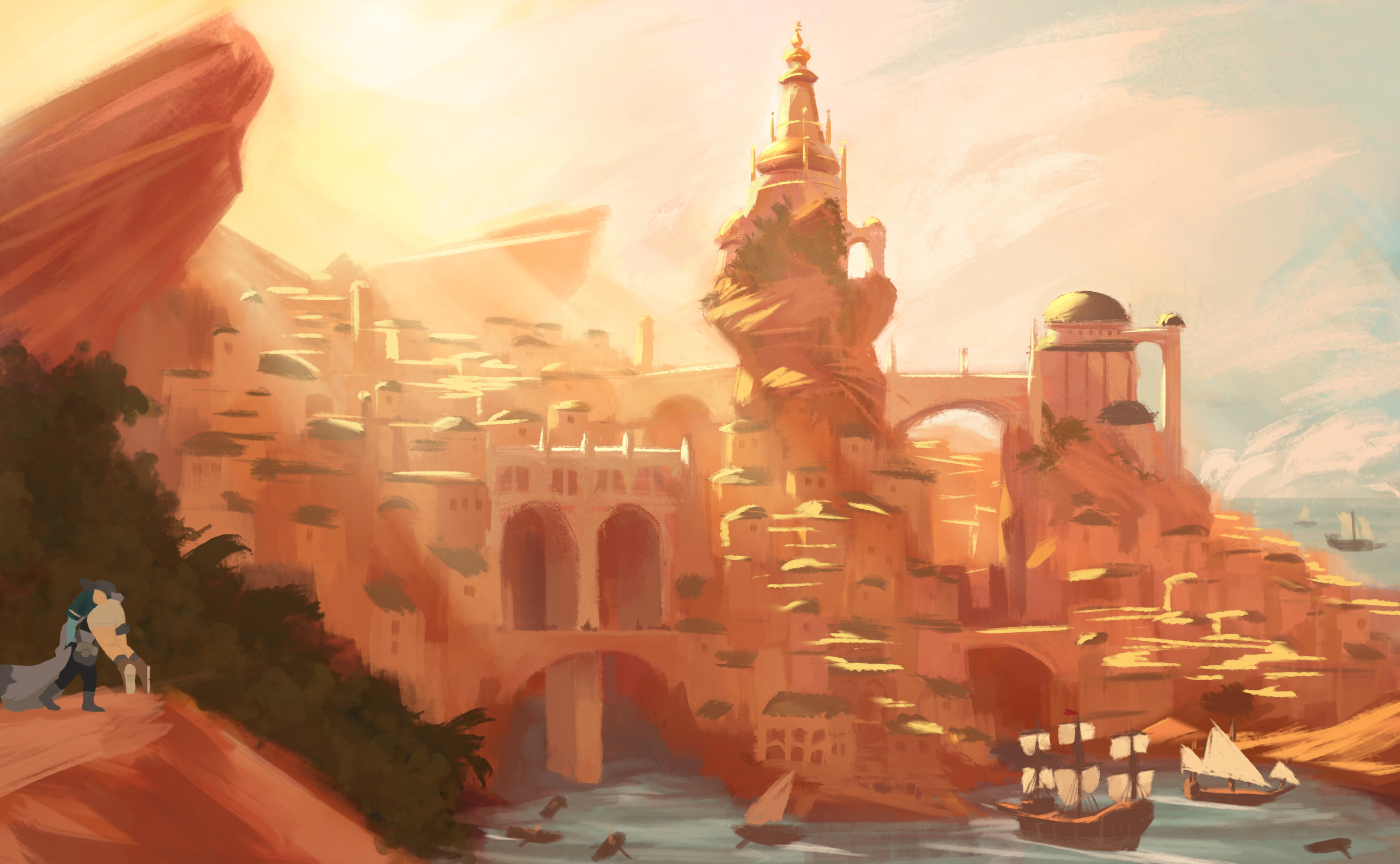
Cohv as seen from the southern cliffs
Denonym
Cohvian
Province
Ruler
Qothic Empire
Previous Ruler
- Mandaskan Empire
- Cohv (Independent city state)
Founded
344 BSF (MCY 9656)
Religion
Language
- Continental
- High Continental
- Herdish
Layout And Geography
Cohv is a vast city nestled on rocky cliffs that hug the sea, with the narrow Masahva river terminating into a waterfall and sea stacks forming the inner districts of the city. The layout of the city itself resembles a sort of long crescent shape, as buildings line the entirety of the vertical stretch in a terraced fashion, with bridges that lead to the center stack, on top of which sits the 9th Beacon overlooking the city. The higher portions of the western city are known to be wealthier as the lower city resting at the base of the rocks is known to be more crowded and poorer.
Geographically, Cohv is considered to have a subtropical climate, but is noticeably more temperate than the interior Hovekish lands to the west. Rainfall is relatively low in sheer volume, but rather consistent in the wet season. The growing season by extension is known to be very ideal, though the amount of arable land is limited by the natural roughness of the local terrain. Still, population increase over the years have strained the natural water supply, necessitating the construction of cisterns throughout the city to collect rainwater, especially for use in water showers.
Locations Within Cohv
History
Founding (Late Dawnterkell)
Before the borders of the Mandaskan Empire reached into Siltria as a whole, The southeastern region of Siltria where Cohv would be founded was inhabited by various Herdish communities. The actual site of the city would be uninhabited until the first Mandaskan expedition into Siltria in 344 BSF (9766 ).
Seeking an alternative to crossing the hostile Ippe river, a small fleet of Mandaskan ships landed in the natural bay of a future Cohv. Leading the expedition were 7 Lightkeepers and High Architect Matuun Bahroomi, along with a few hundred supporting individuals. It was noted that when they were following along the rocky southeastern coast of Siltria in the early dawn, natural spires speckled and gleamed in the a morning fog, striking the curiosity of the expedition.
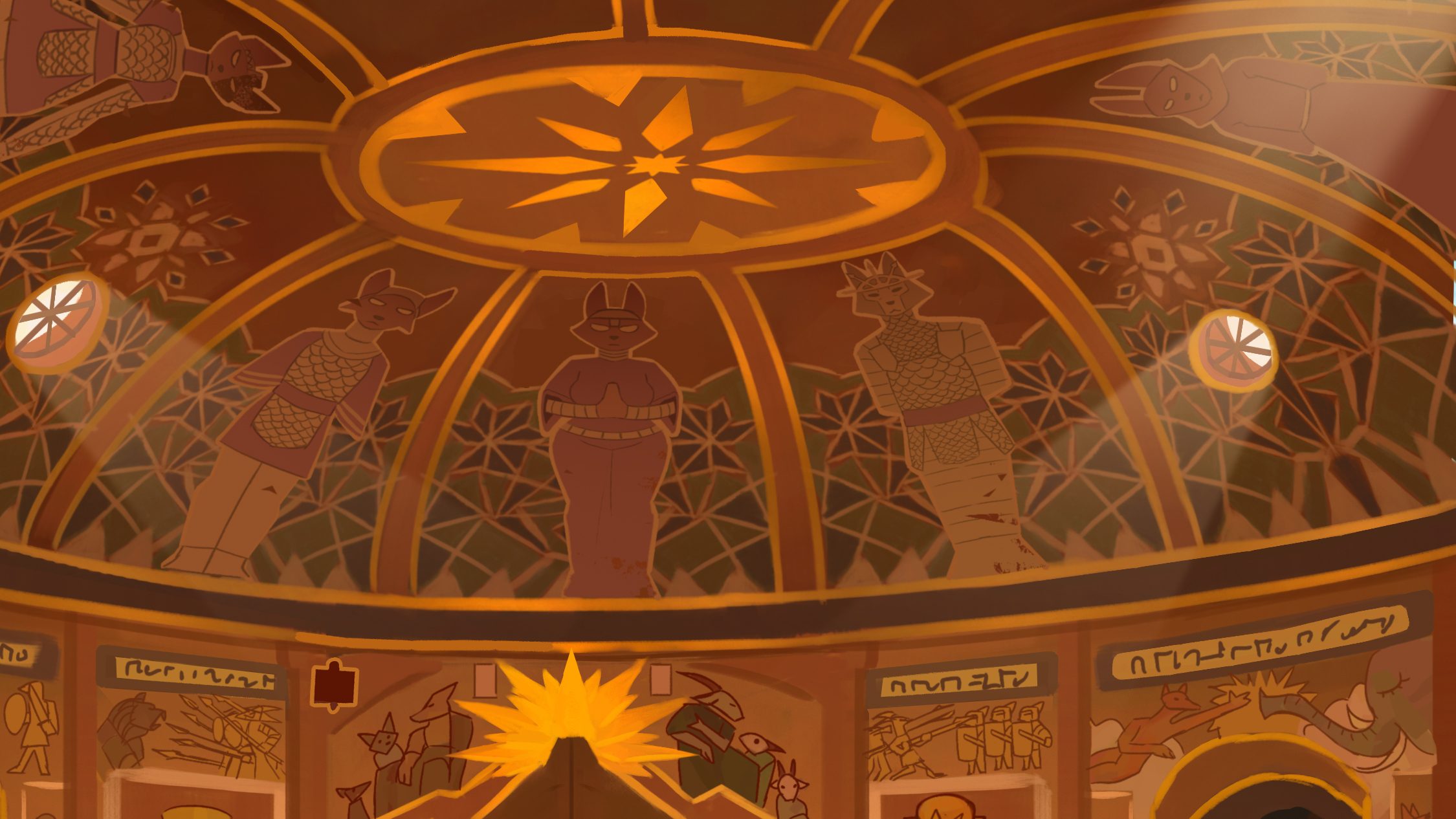
As they approached, it was said that the fog itself made way to reveal a serene natural harbor. As they made landfall, Lightkeeper Marakan reported to have a vision, on top of the center sea stack was a mote of Daunto’s divine light. He quickly gathered a team together to scale to the top of this massive spire, and they would spend the greater part of the day reaching the top. While this light he had seen did not exist at the top, a night of meditation led to another vision, one of a future city with this light at the center, this spot was to be the location of the 9th Holy Beacon, and it’s existence would ensure the future of Siltria would be that of civilization.

Ground would break and the city would form to support the construction of the Beacon, with a mote of Daunto’s light being split and transferred from Mandasko into position at the top as the Beacon would finish its construction a few years later. Cohv would soon expand into becoming the capital of the Mandaskan province of Siltria and would remain so until the empires collapse centuries later.
Sunderkell
As the arrival of Starfall and with it a continent of war and chaos, Cohv, as home of a Shintaric Beacon, was designated as an imperial stronghold and intensely fortified. When the Mandaskan Empire finally splintered and collapsed from the pressures of sunless sky, the Lightkeepers overlooking the city abolished the existing governance and took control over Cohv directly, imposing strict order that was meant to protect the Beacon itself at any cost.
Similar to other Beacon cities of this era, the lives of the local populace were tightly managed, and laziness was tantamount to heresy against the Grand Architect himself. The city navigated attacks and food scarcity alike, the shimmer of The Beacon being the only thing holding them together.
After decades of strife the city would remain standing as the dust settled. Without a direct link to the remnant of Mandasko, Cohv would remain under the control of the 9th Beacon until the reunification of the Shintaric Covenant in 624 (10624 MCY). From that point on, Cohv would be once again ruled by the holy Qohva in Mandasko, though only indirectly.
Early Tinderkell
As Hovehko neared a millennium since the catastrophe of Starfall, society at the time had mostly recovered, though it remained one of disjointed successor states and new nations that squabbled with each other constantly. Cohv itself was spared from any major conflicts that arose, but the surrounding countryside was frequently rife with trouble which made land-based travel difficult, even with the remains of the ancient infrastructure from the Mandaskan Empire’s Damateri road network. A land-based trip from Cohv to the remnant Mandaskan Shintari would pass through several nations on the way, and with dubious safety through many parts.
The Covenant sought to change this with a treaty that would reinstate functionality to the Damateri, guaranteeing mutual security and development for members along the network, with the city of Cohv being its eastern edge. This treaty also brought the reformation of the Beacon Cities into independent city states bound to the agreement, the Beacons themselves remaining under direct Covenant control. The success of the project in time for the new millennium would result in the Covenant using it to usher in the age of Tinderkell, the age of rebirth. The new cooperation in Shintaric Hoveko resulted in Cohv wielding influence not seen since the Mandaskan Empire.
The 5th and 7th Crusade
In 1467, The rising power in Hwombazu known as the Order of the Nanzuul would launch an invasion into northern Siltria and Daunara, severing the Damateri and crushing city after city until only the southern holdouts of Cohv and Mehrivia would remain. Shintaric Hovehko would retaliate and stop the Nanzuul’s advance. This was a part of a series of wars known as the 5th Crusade.
After the dust settled on the 5th Crusade, tensions would remain high between Cohv and the now Nanzuuli Siltria, and any safe connection Cohv had to the rest of Shintaric Hovehko was to be by way of the sea.
In 1548, after a conflict involving Shintaric settlers in central Siltria broke out, The Nanzuul would launch the 7th Crusade, with the focus of destroying the 9th Beacon in Cohv and driving all heretics from Siltria once and for all. The land around Cohv would quickly collapse. and the city itself would come under a lengthy siege, with naval attempts made to surround the city by way of the sea. Eventually the Nanzuul would complete their encirclement of the city, and with the Shintaric alliance struggling in central Hovehko, Cohv had to look beyond for help. This help would eventually come in the form of the Qothic invasion of northern Siltria. This put pressure on the Nanzuul to finish the siege as quickly as possible, and as such they would assault the city in 1562.
There are many reports to the ensuing chaos, but it is known that after intense fighting, the Cohvian defenses buckled, with the Nanzuul advancing into the city and pushing block by block until the Marakan bridge that led to the 9th Beacon came into view. The Beacon itself was manned and fortified, but they were hopelessly outnumbered.
What happened next was a subject of debate, but it’s reported that the Nanzuul occupied areas of the city became engulfed in an inferno, burning the majority of the army in what seemed like an instant. The source of the fire was unknown, only that the Shintarics would claim that it was a holy act of Daunto that struck down the invaders.
Regardless of what happened, the Nanzuul were repelled from the city, though much of the ceded ground was nothing more than rubble at that point.
Qothic Cohv
In the aftermath of the siege, the Qothic invasion meant that there would never be another attempt on Cohv, and the Qothic empire would take complete control over the province outside of Cohv’s borders. The Qoth would not seek to lay claim to Cohv, but instead would offer to reconstruct the lost part of the city as part of a mutual pact between the two. Regardless of the Qoth’s intentions, Cohv was in no position to refuse such an offer.
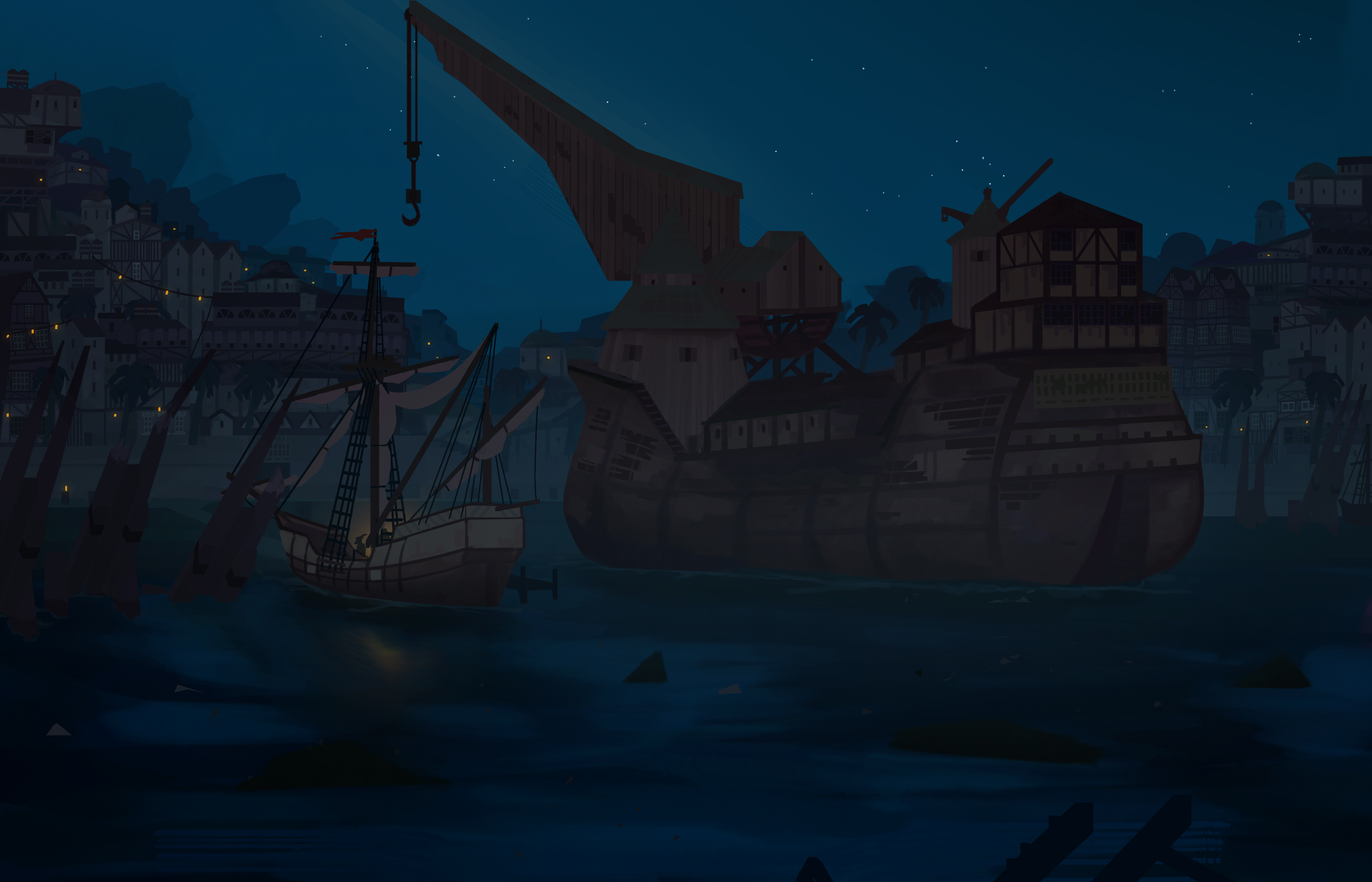
Qothic engineers soon flooded the city and turned much of the northeast coast of Cohv into a robust industrial center that would later become the site of Delaford and Dollace Dockyards’s Siltrian expansion, and massive amounts of temporary housing would go up in the area for the workers and residents who were in need.
Over the next decade, the city would see large swaths of rubble transformed, mixing the native Cohvian style with Qothic additions in architecture and infrastructure. Notably around this time saw the large cisterns that would be used to provide falling water to large parts of the city.
Upon the completion of the reconstruction of the city in 1574, The city-state of Cohv was given an offer to formally be incorporated into the Qothic province of Siltria, a well-timed offer that coincided with the highest levels of public sentiment towards Qoth. Two years later on the 33rd of Ovori, 1576, Cohv would officially become a Qothic territory.
Cohv remains a Qothic territory still to the current day (1592).