
Shintaricism (shin•TAR•eh•sizem), is an ancient religion that is prevalent throughout most of Hovehko and is by-and-large associated with the Mandaskan people. It is a religion that believes in a singular god, known as Daunto, the Father of Sapience and the Grand Architect of civilization.
Central to this faith lies The Covenant of Dawn’s Light, a mysterious institution that once ruled the Mandaskan Empire with divine mandate, and even to the modern day their influence lingers over Hovehko.
At the pinnacle stands the Holy Qohva, the mortal reincarnate wife of Daunto. Beside her stands her many Lightkeepers, who are said to be avatars of Daunto’s divine light itself.
Shintaricism

The Peaks of Dawn, the Shintaric holy symbol representing the arrival of Dauntos light at the summit of the central mountain overlooking the Shintari Valley
Type
Monotheistic
Deity
Daunto (God, Grand Architect)
Demonym
Shintaric
Country of Origin
Mandasko
Ruler Title
Qohva
Tenets
The core tenets in Shintarism are represented as the three Peaks of Dawn: Pride, Progress, and Parity.
Parity amongst kin is an essential belief held by followers of Daunto. They were all given the same spark of sapience, and therefore all species of people should understand that their collective triumph lies in cooperation. Hunters and Grazers were created to work harmoniously in tandem, just like the Mandanto and Shintuln showed them how. A fractured people cannot build, and an isolated people cannot learn.
Progress is the central mandate and is represented by the center peak. The Grand Architect uplifted the world so it could carry the spark of civilization with its denizens. Followers are expected to harness their inner light and create, whether it be building great homes for generations, creating magnificent works of culture, or advancing the limits of possibility. Each person, no matter how meager, can push civilization forward.
And for what purpose is one to build if not to take pride in their work? Shintarics are told to stand tall and show the world their spark, as it is said that splendor is contagious. One that is truly proud is one that will work to make the world something to be proud of.
Regional Variations
Despite the strong central authority in the Shintaric faith as well as the historical attachment to Mandaskan conquest, its adoption within the chaotic patchwork of continental cultures has proven to be equally as chaotic as it is colorful.
Mandasko City
The Shintari region of Hovehko, stands the capital of Mandasko City. It is the home to the Shintaric faith, and is widely propped up as an example for the other young and historically Shintaric regions. However, when sitting in the cities that were built millennia prior, a larger emphasis is put on preserving what came before than building anew. Some may argue this is stagnation and not progress, but the Shintarics in the region take pride in this preservation.
The faithful in the Shintari also are known to perform their rituals in a much more energetic and light-hearted manner, focusing more of their time on passion and creativity as their form of devotion.
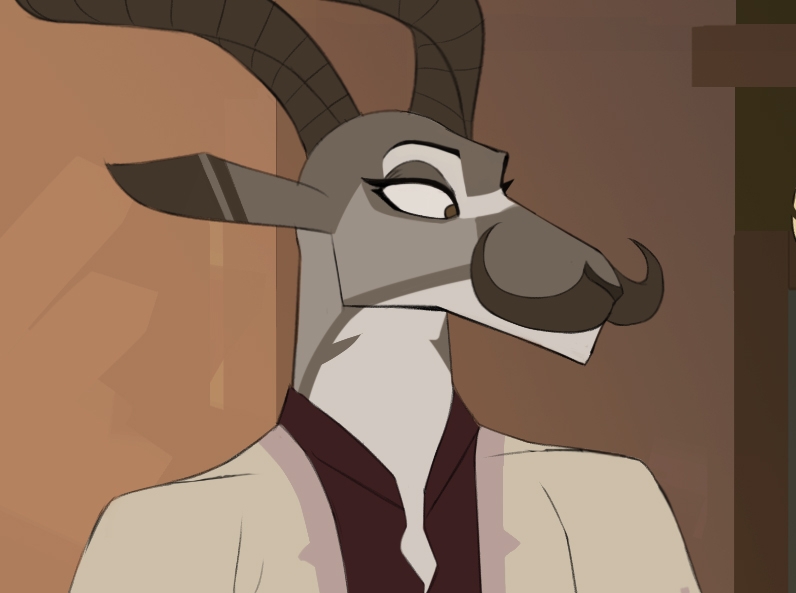
Janko, born in Mandasko, is what some would describe as the quintessential Shintaric.
Siltria and Eastern Hovehko
In the realm which dawn rises first, there is much more cultural osmosis that bleeds into their practice of Daunto’s word. Siltria in particular is a direct neighbor to Hwombazu and is very much influenced by the Herdish culture. This has led to Shintarics from this region practicing somewhat more humility and communal hospitality in general, preferring to take more pride in the social communities they build more than material prosperity.
In practice, the Herdish Shintarics take their faith seriously, with some even carrying over customs from Pasturism in many areas of western Siltria, despite being rejected by covenant leadership.
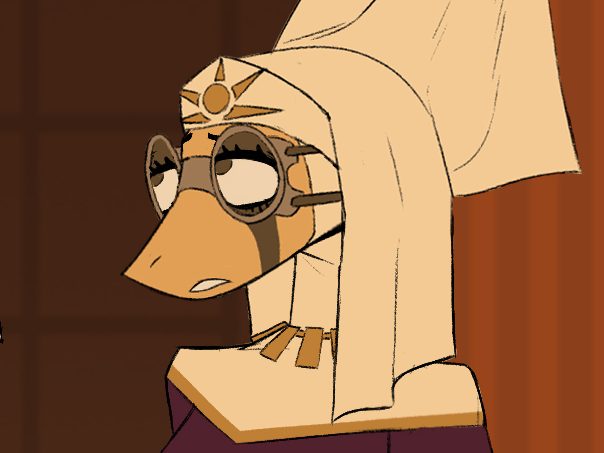
Sister Roni, though a devout Shintaric, is ethnically Herdish.
Amurra and Western Hovehko
In the western edge of Hovehko, Shintaric practices tend to reflect the customs of the Hunter population that dominate the region. There is a large emphasis on small rituals that resemble ancient hunting rites rather than large institutional congregations, and these rites often seek a greater balance with nature and the holy light that permeates within it. In general, Western Shintarics tend to seek progress in tandem with the natural order, rather than seeking to become the masters of it.
Within the actual structure of The Covenant itself, due in part to social tensions caused since the fall of the Mandaskan Empire, western Shintarics reject the role of the Mandanto in society. Amurra, a former Mandaskan state, goes as far as to reject the word of the Holy Qohva and appealing directly to the Lightkeepers instead. This practice is considered blasphemy, but any effort to put an end to this has been stopped through Lightkeeper intervention, further boosting western popularity for the divine avatars.
Qoth
Qoth is the farthest nation to have recognized Shintariscm, and it is by far the most unorthodox. In Qoth, Daunto is referred to as Dawntyr and is mostly worshipped in addition to many other gods in the Tower of Clyghythyx, rather than under the Shintaric Covenant. Dawntyr is regarded as the God of Progress, keeping in line with one of the core tenets of Shintaricsm, though typically taken to an extreme. Innovators within Qoth see technological progress as a necessary act of faith regardless of the ethics, as long as the pursuit pushes the broader society forward.
One popular example of this manifestation lies the medical experiments of blood transfusions, where the terminally ill or convicts are subjected to blood transfusions by donor candidates in order to find which ones are of “pure blood”. The majority of the subjects are known to perish in the process, but the ones who do survive have the donor blood further tested, and if no others perish due to their blood, then the donor is revealed to be “A Pure One” and are considered blessed by Dawntyr, being revered in Qothic society and used to save lives domestically and in the battlefield. Often they are clad in a silver mask similar to that of an Eternal Guardsmen and wear an ornate hat with vermillion clothes, to mark their service and devotion to life.
It is unclear whether The Covenant is more enraged or baffled by this interpretation of the faith, but for the smaller population of Qoth that are more traditionally Shintaric, and for maintaining friendly diplomatic relations, The Covenant remains active and exceptionally patient with their strange allies.