
“My beloved, hear our children sing your name through their trunks. You are Qohva, Dawn’s Lady. Through your grace, and the will of one thousand Lightkeepers, may the radiant light of civilization spread until all the realm is illuminated under us.”
– Qohva 6:13
Mandasko is an Ancient city and empire that ruled over most of Hovehko, and still remains as a significant country in central Hovehko.
Considered The harbinger of civilization, it was the first known domain in this world. A powerful empire created in the name of a god and his demigod wife, Mandasko shaped much of modern Hovekish culture, and old structures and ruins are found all the way from Tenvar to Siltria.
Modern Mandasko still remains an important religious and cultural center of Hovehko, more recently famous for its neutrality and tourism.
Mandasko
Motto
“We go on.“
Capital
Mandasko
Religion
Shintaric
Demonym
Mandaskan
Language
Continental
Government
Theocratic Monarchy
Predecessor
Madaskan Empire
Founded
10000 BSF
Geography
The city of Mandasko was founded in a valley at the base of the Peaks of Dawn in the Shintari Province, where the cold temperatures of the mountains meet with the tropical weather of southern Hovehko, creating vast melting glaciers that still provides for the modern inhabitants to this very day.
While the Mandaskan empire would grow to encompass the full extent of the diversity of the continent, the heartland of the empire that the modern country resides in has always been associated with a tropical climate.

Government
Mandasko is directly ruled under the Covenant of Dawns Light, the organization at the heart of the Shintaric faith. At the top of this organization is the Qohva, believed to be the reincarnate wife of the Shintaric God, Daunto. under her are the Lightkeepers, who are said to be born into this world as avatars of Daunto’s light and tasked to protect it in order to preserve sapience itself. Underneath them are the Three Pillars, bodies that involve governance of the realm, conventional defense, and the overseeing of the clergy.
Qohva And Lightkeepers
As the chosen matron to guide the Shintaric people, the Qohva is considered the Defacto authority on any matter and is believed to be the only one outside of the lightkeepers to bless the world with her divine gifts. The Qohva from birth is said to posess a divine connection to Daunto himself and the echoes of her previous reincarnations, which guides her wisdom.
Traditionally, the Qohva over the millennia have shown to be quite stable leaders, but not infallible, and clouded vision could prove disastrous. As such, while the Qohva’s power is considered absolute, her power can be checked by a majority of Lightkeepers voting against her if they see a reason in which her mortal vessel is unable to use adequate judgement on a matter, and Lightkeepers themselves are checked by their internal hierarchy that is not well understood to outsiders.

As the fragments of Daunto that originally gave and nurtured the mote that would become the First Beacon, the Lightkeepers are an essential part of Shintaric society, deeply ingrained to the point that even the eight months of the year come from the original lightkeepers that tended the First Beacon at its founding, Lorakan, Alrunara, Ovori, Jol, Mavalan, Gharmuud, Kuentusak, and Zoke. They wield authority similar to that of the Qohva and taken on many different roles outside of tending to the holy beacons.
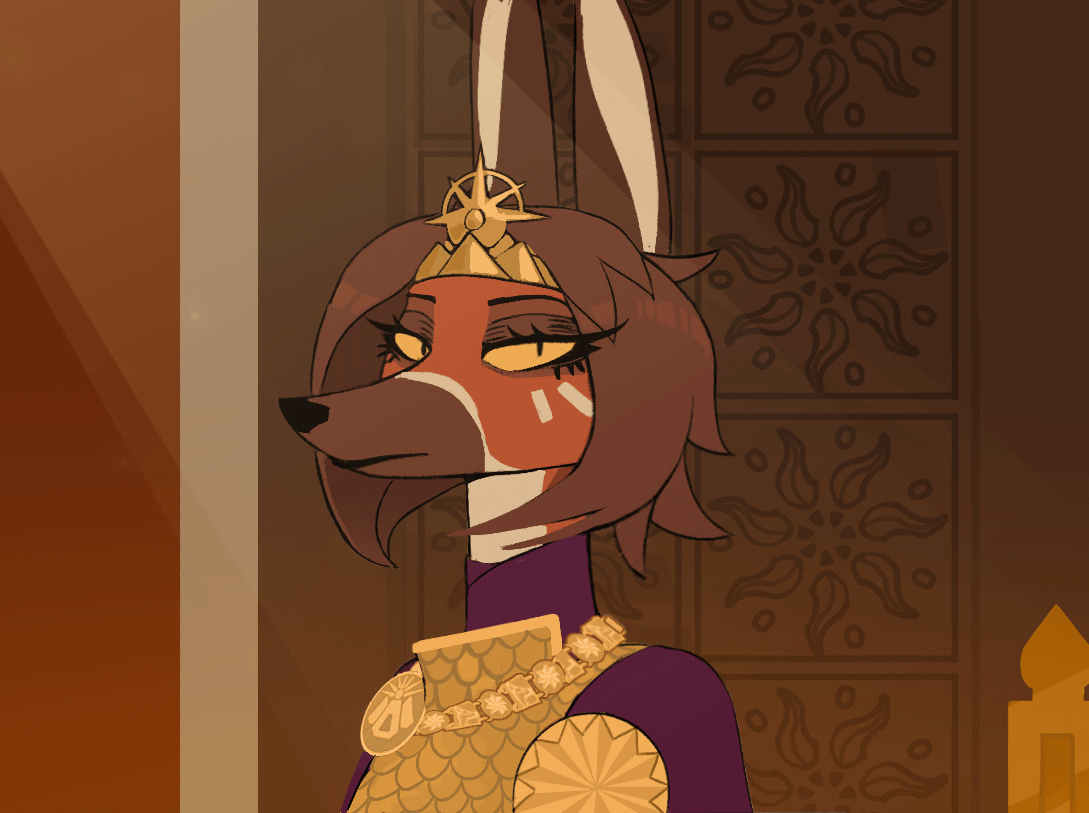
Lightkeepers, as per the will of Daunto, are exclusively Shintuln in species, and are to be born in the Shintari valley or highlands, under the influence of the first and strongest of the holy beacons. As with the Qohva, who is a lightkeeper is supposed to be predetermined by birth, and it is the duty of the covenant to find these individuals. Unlike the Qohva however, who’s birth is known but will only be revealed in childhood, it is said the birth of a lightkeeper is only known to those who gaze into his holy light, and the process to find a lightkeeper is done in the first year of a Shintulns life. The process involves finding pups of interest and performing a myriad of tests that can range from color preferences to responsiveness to small flame. If they find individuals of interest at this stage, they then proceed to further tests in private to get more confidence in the candidates before subjecting them to the ultimate trial, one that’s specifics are secret, but proves this passage, “A fragment of God is one of the same with his power, and thus is the one that wields the holy motes without effort and without peril”. While it’s unknown about what the actual trial is, the rate of success is not perfect, and it is possible that a few may die before a Lightkeeper is found. Upon success, the pup from that point on is a Lightkeeper, and they will be taken into the covenant and raised as such.
The amount of Lightkeepers that have existed have varied over time, but the current count of them seems to be around 70 in number, at least for those in the public eye. This number also appears to be smaller than the past, which also coincides with the delegation of some of their traditional duties to individuals of lower station, sometimes even leaving a beacon unattended for a period of time. Still, as the role Mandasko has played in the world has changed overtime, so does the Lightkeepers.
Three Pillars
Outside of the authority of the Qohva and Lightkeepers, the majority of Mandasko is run by a collection of government bodies known as the Three Pillars, in reference to the three pillars of the Shintaric faith.
The First Pillar, representing the tenant of pride, oversees religion, foreign relations, and day to day management of the country. It is the pillar most associated with the Shintaric Covenant itself and manage all treaties and agreements.
The Second Pillar, representing the tenant of progress, is responsible for creating laws and overseeing development and infrastructure across all spectrums.
The Third Pillar, representing the tenant of parity, is responsible for justice and defense of the realm. They oversee the Mandaskan military and the holy courts.