
“I’m not sure what came first, the spice or the bovani.”
Bovani are a diverse and ubiquitous species native to Hovehko, residing in nearly every region of the continent. They are by far the most numerous species, boasting the largest population and exhibiting the greatest variation among individuals.
Despite not holding the same societal power as the Mandanto throughout history, the Bovani have arguably played a more significant role in shaping Hovekish society into what it is today.
Contents
Bovani
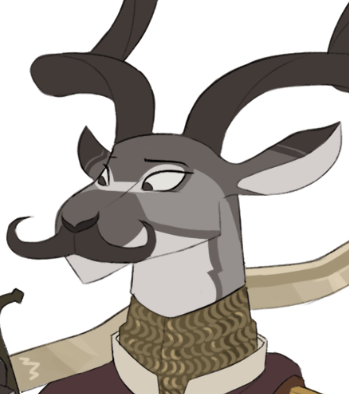
Troph
Grazer
Height
5’2”- 6’10” (157cm – 208cm )
Physiology
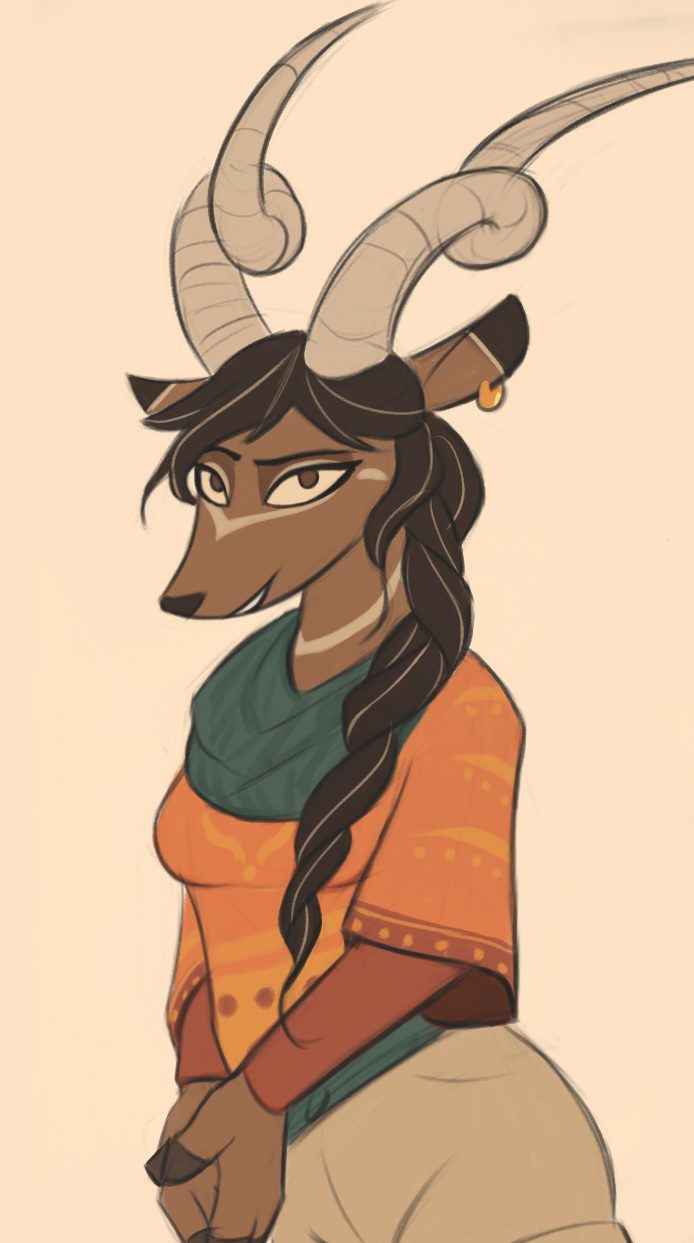
Despite the great diversity of Bovani, they are generally characterized by a sleek head with wide eyes, short fur, and horns that vary in shape and prominence. Their size and fur color can differ greatly, though their eyes are typically brown.
Horns
A Bovani’s horns are often considered the most unique feature of their appearance. These horns exhibit a wide variety of forms, ranging from straight to curled, facing backward or sideways, and varying in size from long and sharp to short and blunt. In much of Bovani culture, longer and more intricately curled horns are seen as more attractive.
Beyond their aesthetic appeal, horns play a functional role in regulating body temperature, helping Bovani stay cooler in hot environments. They can also learn to control heat circulation within their horns to improve burn tolerance and, in rare cases, to concentrate and even direct heat, an art known most commonly in the Shintari province of Hovehko.
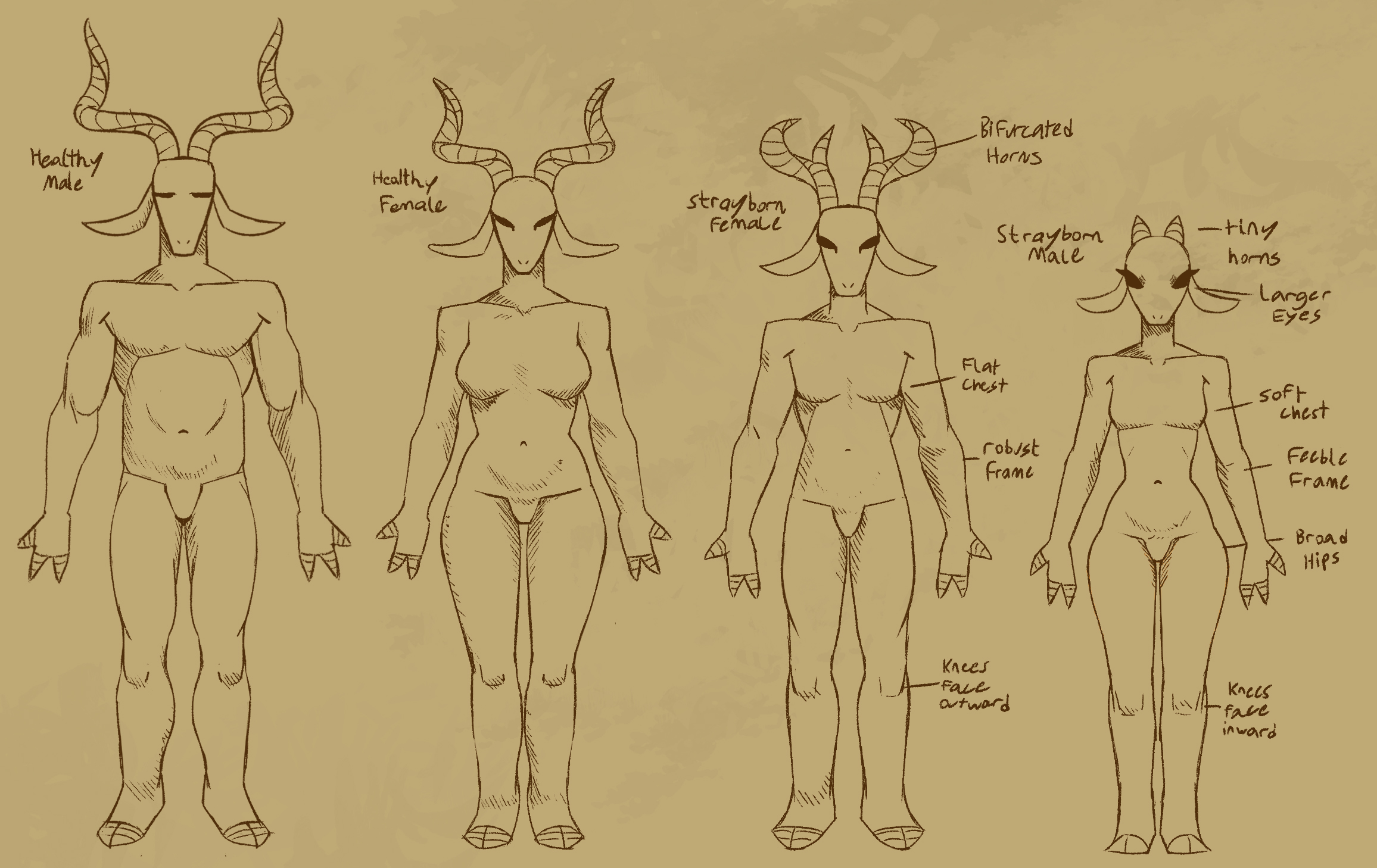
Both male and female bovani are capable of growing full horns, with male horns typically being larger. The development of a Bovani’s horns, as well as their overall growth, is primarily influenced by genetics and whether they were conceived during the Harvest Window.
The Harvest Window
Like some other grazer species, the timing of conception plays a significant role in a Bovani’s development. For optimal growth, Bovani must conceive during the Hovekish dry season, known as “The Harvest Window”. Breeding outside this period, particularly in the middle of the wet season, can lead to developmental complications. Off-season offspring, known as “strayborns” are born shorter, sterile, and exhibit abnormal hormonal balances. These changes affect both sexes, with strayborn males developing hormonal profiles favoring a female’s, and vice-versa.

During mating season itself, Adult Bovani also notice significant hormonal changes as well. For typical Bovani, males gain muscle mass, and females gain more feminine in appearance. For those born off season, the results are again flipped, but many report to feel a seasonal sickness during this time as well.
Personality
As with their physiological diversity, there isn’t known to be one type of behavior or culture that the Bovani are known for. All of Hovehko is their community, and most Bovani identify with their province of origin, instead of their species.