“In their minds we are only lesser servants. But you know this not to be true, don’t you? Only we can feel the gentle caress of the North. It is there to guide us, whether in the trueness of a bow, or in our search of a distant horizon. This is our destiny, and no shackle can keep us from it.“
–Lady Mi, Mother of the Sorya
The Sorrova (zor•roe•vah) are a vulpine-like species primarily found in the western hemisphere. Renowned for their exceptional adaptability and sense of direction, thanks to a unique phenomenon known as The North’s Whisper. This innate ability has earned them the reputation as the world’s greatest navigators. As a result, the Sorrova reside all across the western hemisphere, having diverged into three distinct subspecies, each shaped by their own specific environment: the Gnomanyan Sorrova, Tropical Sorya, and Arctic Andkii.
Sorrova
Troph
Hunter
Height
4’8” – 6’2” (142 – 188cm)
Weight
70 – 200lbs (31 – 90)
Physiology
The Sorrova, across all subspecies, vary greatly in size, color, and anatomy to suit the environments they inhabit.
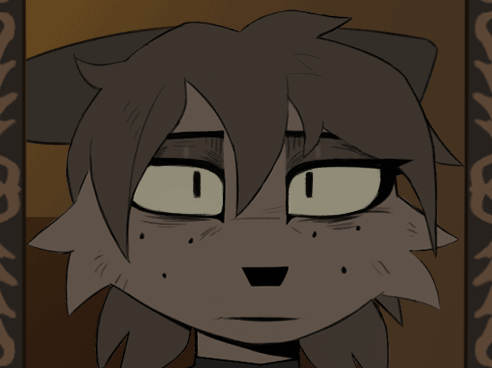
The Gnomanyan Sorrova are the largest and hardiest of the three, found in their respective continent of Gnomanya. They can grow near-endless fur across all parts of their body and are distinguished by a full head of hair, possibly for moisture-wicking capabilities. Their fur colors are usually drab, ranging from greys to browns, and even black. Eye colors include green, yellow, and grey. Gnomanyan Sorrova have three toes on each foot.
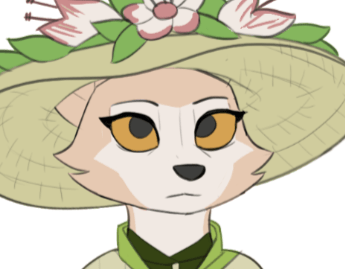
The Sorya are a type of tropical Sorrova that inhabit the continent of Kopothokualassa. Shorter in fur and stature, their coats are more colorful and vibrant, with hues including orange, cream, white, blue, and obsidian. Their eye colors range from yellow, orange, teal, and red. Being thalassic, the Sorya are excellent swimmers and can hold their breath for up to 10 minutes. Most Sorya have four toes on each foot, despite only being about a thousand years removed from their Gnomanyan ancestors.
The Andkii are a mysterious race of Sorrova that inhabit the frigid, near-inhospitable continent of Andako. They are the shortest of the three subspecies but are best suited for subzero temperatures. Andkii are said to be predominantly white, with some rare individuals exhibiting grey fur. Their eye color is typically blue, and some have claimed to see those with violet eyes. They are rumored to live twice as long as their southern cousins, though much about the Andkii remains hearsay due to minimal contact.
One common trait shared by all Sorrova is their ability to sense what is referred to as “The North’s Whisper” — an innate sense in their heads that allows them to always know which direction they are facing, as though their minds naturally contain a compass. They also claim this ability also helps with precision in various tasks including shooting, spearfishing, and archery. And despite the Sorrova being renowned for their accuracy, it is unknown exactly how much this ability is responsible.
Personality
Sorrova can be quite cunning and intelligent, across all variants. With Gnomanyan variants being the most intelligent, though it is not known if this advantage is biological or societal. Sorya have made a name for their tricky and scheming natures, having developed the most elaborate spy-state in the world. A strong sense of curiosity is also prevalent with sorrova, leading to a strong lust for discovery and experimentation.
History
Origin
Most of the information about the early history of the sorrova comes from tales of their enslavement at the hands of the Wuln. With the dominance of Wulnic clans across ancient Gnomanya, it is widely believed that most Sorrova, excluding the Andkii, can trace their ancestry back to the Sorrovan chattel.
Being much weaker than the Wuln and existing also as hunters, the Sorrova were favored as domestic servants and for artisanal labor. Still though, the Sorrova were shackled, but after many generations, they’d get a chance at freedom.
Rebellion
In the late ancient period of Rendalkell, a movement for liberation began to take root as the Wuln’s dominance fell to internal famine, and the once great clans would fight over the what little grazers remained. According to Sorya legend, this era marked the rise of Lady Mi, a young domestic slave of a prominent Wulnic clan.
The tale recounts how Lady Mi, seeking to express defiance after being denied the ability to venture to the nearby river to pick flowers, managed to sneak out anyway into the world and found a red flower—an item of extreme rarity in Gnomanya—fixing its petals into her hair. Her Wulnic master, enraged by this act of self-expression, flogged her before a crowd of her kin, intending to make an example of her. However, as the Sorrova looked upon Lady Mi, they saw not submission, but strength reflected in her eyes. And after the red flower was casted to the ground, the breeze picked them up and reassembled it back into her hair.
It is said the Wulnic master soon realized that the example to be made was not of Lady Mi, but of themselves—the start of the Wulnic people’s impending downfall. Inspired by her defiance, the Sorrova rose up, breaking free of their chains and revolted at any cost.
The uprising was long and bloody, with the Sorrova fighting relentlessly for their freedom. With the aid of their Catoxl allies, they ultimately wiped out their masters. This hard-won victory marked the beginning of a new era for the Sorrova, one that they would have control over.
Migration
As the Sorrova stood with their chains broken and their lives finally their own, they faced a choice. Some looked to the lands of Gnomanya—the home they had fought so hard for and saw an opportunity to build a new world alongside their Catoxl allies. Others, however, turned their gaze toward the distant horizon, yearning for discovering whatever lies beyond.
Among those who looked outward was Lady Mi. Under her guidance, and with the North’s Whisper to steer them, these Sorrova ventured to the seas in search of a new beginning. Their journey led them across vast waters to the continent of Kopothokualassa, where they settled and adapted to this new world. Over time, these settlers became the Sorya, their bodies and culture transforming to suit their new home.
This migration marked a pivotal moment in Sorrovan history, as the shared identity of their people began to branch into distinct paths. The resilience and adaptability that had once defined their survival under oppression now became the foundation for their growth and evolution. Whether on the rugged lands of Gnomanya, the vibrant coasts of Kopothokualassa, or the frozen wilds of Andako, the Sorrova endured, guided always by the silent Whisper of the North.
Cultural Significance
As a species whose existence was once that of captivity for a majority of its members, most of the Gnomanyan Sorrova inherited their original culture from the Wuln, and after being freed they would still remain a significant but minority group in the region. Despite this, the Sorrova would stand out for their creativity and curiosity, and like their Sorya cousins, would be major players in discovery.
In Kopothokualassa, the Sorya had managed to become the dominant species in the region after their migration, with the rest of the world often using Soryaban to describe the continent itself. For those species that had inhabited the great reefs before, they would regard the Sorya as “invasive” and “wild”, though they also remarked on just how quickly the Sorya adapted to the Kualassic shelf and that Sorya culture is admittedly also predominately Kualassic in nature, rather than foreign.
In western Hovehko, Sorrova of any kind are a rare minority, most being Gnomanyan refugees from their kingdom’s collapse. However, their species’s exploits are known especially by those who trade with the Sorya, and they are respected for their intelligence in the world of the unknown, and in a marital context, their legendary precision.
In central and eastern Hovehko, the population of Sorrova is too insignificant to include in official demographics, and in the far east, practically nonexistent. What is usually known of Sorrova exclusively comes from the region’s knowledge of the Sorya in particular, and many in the east in particular who know about them view them with distrust, especially in the outbreak of the Three Gates War.