“Gnomanyans could have been great had they not been Gnomanyan.”
– Qothic Scholar
Gnomanya, (pronounced NO-MON-YAH) formerly the Kingdom of Gnomanya, is a large continent located in the Western Hemisphere. It is bordered by the Sea of Wrath to the north, cradled by Kopothokualassa to the southwest, and Hovehko to the East.
Contents
Gnomanya

Captial
Enduring Bulwark
Largest City
Writhing Gutter
Species
Moon Catoxl (75%)
Sorrova (20%)
Other (5%)
Religion
None (90%)
Spirit of the North (10%)
Demonym
Gnomanyan
Language
Wulnic
Government
(Former) Technocratic Noocracy
(Current) Failed State
Currency
Lock
Geography
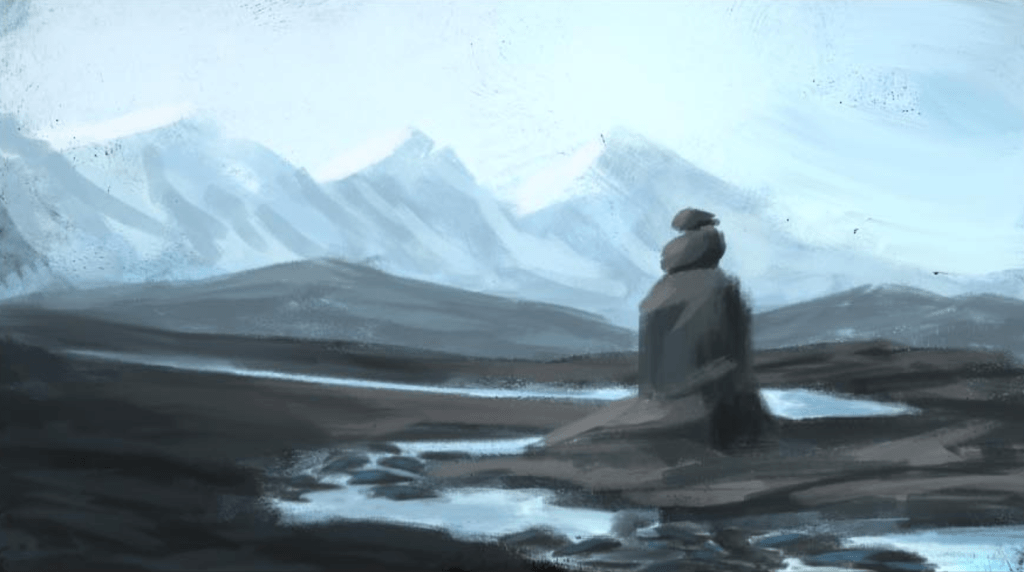
Gnomanya is a large, peninsular continent extending from northwestern Hovehko. To the south, it faces the Sea of Brine, the saltiest body of water in the world. The continent’s western half consists of a tight chain of large islands that merge into the Great Archipelagocia to the southwest.
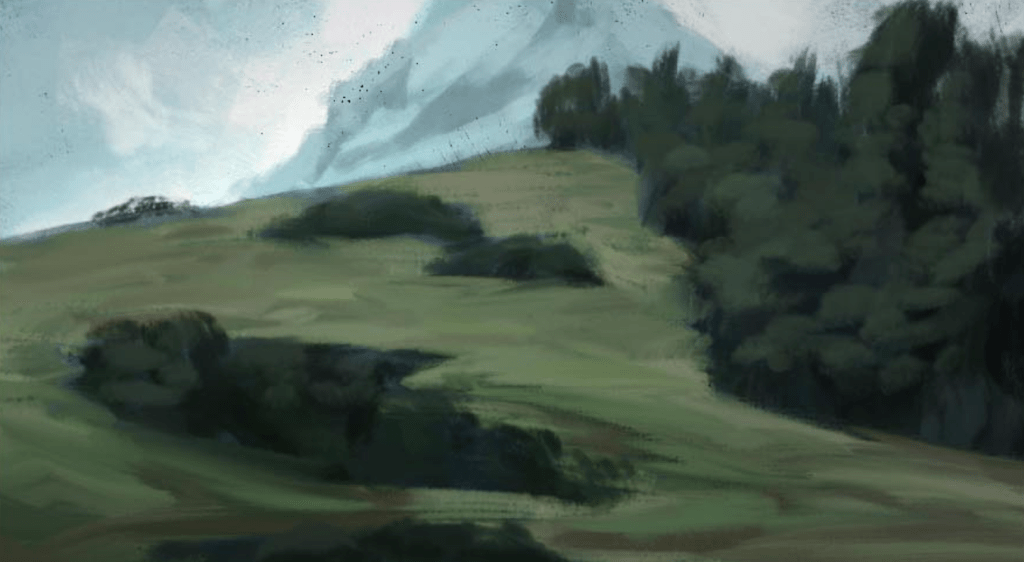
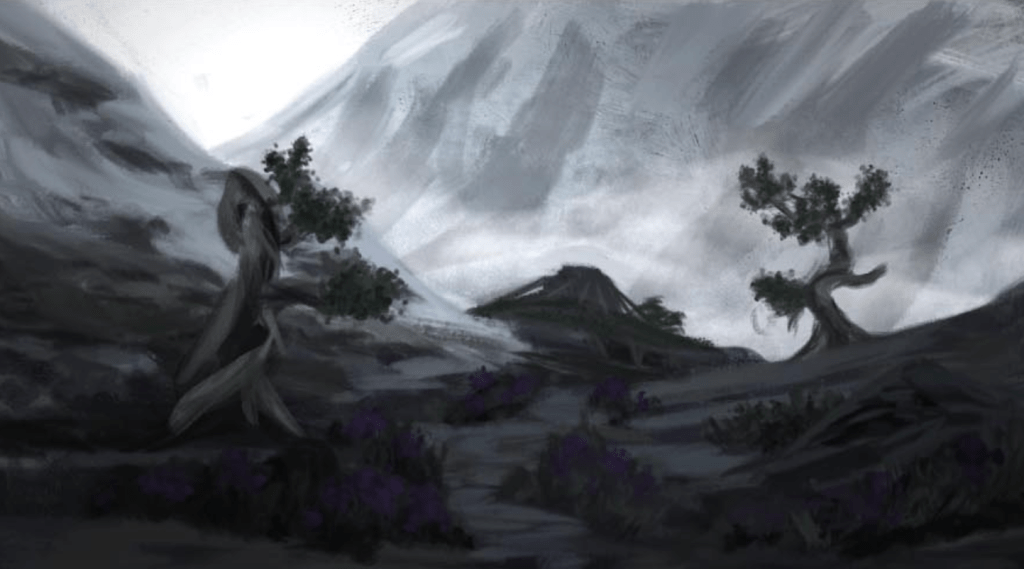
Gnomanya is home to many terrestrial biomes. While much of the mainland is covered by steppe, a significant mountain range separates the continent from Hovehko. In the lowlands, Gnomanya hosts the world’s largest wetlands, teeming with fauna including the fearsome moss draggers and ass biters.
The climate in Gnomanya is marked by extreme weather due to the clash of hot air from Hovehko in the south and cold polar air from Andako in the north. Tornadoes are very frequent and intense in the steppe.
Notable Places
Writhing Gutter
A 5,000 mile long fortification dug to contain The Consciousness.
Enduring Bulwark
The capital of Gnomanya, now infested by The Consciousness.
Splendiferous Expanse
A large, golden expanse of grassland. Grazing ground for Tramplers, and controlled by the Splendiferuous Horde.
Sinking Muskeg
A sinking city located in the southern boglands.
Fortified Frontier City known for repelling countless invasions. Been active since it’s founding.
History
Ancient Gnomanya
Due to the collapse of modern Gnomanya’s society, much of the records covering its past have been strategically destroyed, or sealed in mind vaults as countermeasures against The Consciousness.
In the ancient Daunterkellic era, a diverse array of tribal species populated the landscape. Many of these species grazed the vast steppes and foraged in the dark forests, in contrast to the uniform hunter populations of today.
However, as the era drew to a close, the ancient Wuln, a species of hunters that dwelled in the far north, began to invade much of the continent. Riding atop fearsome Wooly Tramplers accompanied by their chattel of Sorrova, they wiped out many of the early inhabitants out via displacement and excessive hunting. The Wulnic clans would govern the heartland of Gnomanya for a millennium. Despite their violent ascent, they laid the groundwork for numerous facets of Gnomanyan culture and progress, including the language that modern Gnomanyans continue to use.
Fall of the Wuln
During the late ancient period of the Rendalkellic era, the world was engulfed in chaos and war, and Gnomanya was no exception.
As the Wuln hunted the grazer inhabitants to the brink of extinction, the once fierce rulers suffered chronic famines, causing widespread disorder and conflict among the clans. Seizing the opportunity, the Sorrova slaves revolted against their Wulnic masters, with help from the minor Catoxl clans in the south. The continent would endure years of conflict until the Wuln became utterly destroyed. To this day, the Wuln population is near extinct, and has not recovered since.
Free of their chains, the majority of the Sorrova migrated to the Great Archipelagocia to start new lives, leaving the Catoxls as the new rulers of the land.
Thriving in a World Torn Asunder
As the flames of war extinguished, the era of ashes began, marking the onset of the Great Sunder. With the absence of their Wulnic overlords, the Sorrova and Catoxl clans united as a kingdom and were quick to achieve many technological advancements, yielding many breakthroughs in science, mathematics, astronomy, infrastructure, and philosophy. Gnomanya would not only endure the dark times but also flourish, and remain largely insulated from the global dark age. And as a result, the kingdom emerged as the world’s preeminent power, that would cherish the pursuit of knowledge and work to secure much of that knowledge inside of Mind Vaults.
Fall of Gnomanya
Come the early Tinderkellic Period, the Kingdom of Gnomanya faced numerous challenges. As the kingdom expanded, it frequently clashed with neighboring lands. The southern bog clans proved especially persistent, staging constant skirmishes. The kingdom’s southernmost city, situated on a crucial river delta, earned the nickname “Unyielding Bastard” for its resilience in fending off numerous assaults. Nevertheless, the kingdom continued to expand gradually, but it would soon have to halt its expansion due to larger emerging threats.
The Confederation of One-Thousand Islands of Soryaban, descendants of freed slaves who migrated a millennium ago, also held interests in the region. For a considerable period, relations between the two nations remained amicable. However, escalating territorial disputes between two islands eventually sparked a vast, bitter war, known as the War of the Twins.
The War of The Twins, waged between the Confederation of Soryaban and the Kingdom of Gnomanya, marked the first significant conflict between two nations armed with gunpowder. Although Gnomanya initially achieved several victories, a final and formidable threat soon emerged–one that would ultimately bring the kingdom to its knees.
The Consciousness, though not much is known about it, was catastrophic enough to cause a rapid societal collapse, bringing the fall of the Kingdom. It swept across the countryside, faster than it could be understood. In a desperate attempt to contain it, First Scholar Osmium decreed that a 5,000 mile-long trench would be constructed in the east, leading to the formation of the Writhing Gutter. While the project would work as intended, it came at the cost of devastating casualties, including the Scholar King himself. In a last desperate attempt to protect the rest of Gnomanya and the world, acting general Steel Cross in a final order to the Gnomanyan army, mandated that all remaining soldiers either entomb themselves in mind vaults to protect any remaining knowledge from falling to the consciousness, or work to scorch the land around them.
In the ensuing chaos there was a complete and total breakdown of order in the kingdom. Many looked to the flee to the closest bastion of order in the Confederation controlled coastal islands, but the ships were either turned away or sunk outright out of the Sorya’s fear that the Consciousness might spread to their reefs.
It is still said the fallout from this blight still renders much of interior Gnomanya uninhabitable, it’s spread stifled, however.
All in the span of a half a century, Gnomanya has been reduced to a loose collection of city states and roaming warlords, residing in the ruins of a great nation. The only direct remnant of the old kingdom’s government being the city of Unyielding Bastard, A fort that has isolated itself from the rest of the world and is hostile to all outsiders.
Government and Politics
Gnomanya currently has no functioning government. Since Tinderkell, the stability of the nation has rapidly disintegrated and is now home to a patchwork of struggling factions.
Prior to its collapse, Gnomanya was governed as a Technocratic Noocracy, with a First Scholar at the helm, overseeing subordinate regional governors who each specialized in their respective fields of expertise.
Culture
Gnomanyans are known for their rowdy nature, a trait that has persisted even before the country’s collapse. However, they are also revered for their ingenuity and curiosity. Qothic scholars have often noted that Gnomanyans have the world’s brightest minds… stunted by being Gnomanyan.
Notable Gnomanyan inventions include the stirrup, telescopes, anesthesia, gunpowder, the wheelock, flamethrowers, and the F-word.
Gnomanyans harbor deep-seated prejudice against the Kualassic cultures, most notably the Sorya, due to their bitter history. However, their biases are not directed at species; the Catoxl majority embraces the Sorrova minority as their own and even grants esteemed foreigners the honorary title of “saltmen.”
Inherited from the Wuln, riding has become a core aspect of Gnomanyan identity, especially in the steppe regions. Gnomanyans are notably among the few cultures to have domesticated an animal for transportation: the Wooly Trampler. This hardy, stubborn creature is endemic to the continent, and can only be wrangled by an even more stubborn rider.
Appearance
Moon Catoxls encompass a vast majority of the country’s demographics, with the minority being mostly Sorrova. Though both typically have a drab colored fur, setting them apart from others of their genus. Uniquely, they are the only group capable of growing fur continuously across their entire bodies, possibly an adaptation for water-shedding properties. Gnomanyans maintain their shaggy locks, and Catoxls style and trim their cheek fluff, known as “chops,” along with their head fur. Women often closely shave their body fluff and braid their hair.

Assorted Gnomanyan Catoxls
Music
Gnomanyan music is deeply rooted in themes of overcoming struggle, exploring astronomy and science, firearms, and the frontier. Post collapse, musical themes have shifted to mostly cynical, if not comedic at times. The traditional music features a variety of instruments such as the Wailing-Wheeler, a hand-crank-operated string instrument, and incorporates unique singing styles like throat singing.
Sword dancing is a distinctive aspect of Gnomanyan culture. This dance emphasizes hip and belly movements with a percussive yet fluid style. Performers balance a throat cutter, a traditional Gnomanyan sabre, on their heads while executing intricate hip movements.
Cuisine
The Gnomanyan diet consists predominantly of meat, fish, dairy, insect protein, and alcoholic beverages. The most common dish is salt soup, which is a salty soup (hence the name), made with vinegar, sour leaves, and chunks of meat or fish. Salt plays a crucial role in Gnomanyan cuisine, so much so that it has become a symbol of national identity. Gnomanyans also enjoy acidic and sour foods, and with many foods being pickled. Moss draggers are hunted for their meat, and the Sea of Brine serves as a significant fishing ground. Alcoholic beverages are highly popular and typically very strong, though Gnomanyans are known for their exceptional alcohol tolerance.
Firearms
Since the discovery of gunpowder, firearms have been central to Gnomanya’s culture for centuries, with both men and women openly carrying them in their daily lives. Gnomanyans have mastered the use of wheelock firearms while riding Wooly Tramplers, making them tremendously effective for both hunting and combat.
Traditions
Death Duels are a custom of Gnomanyan culture, and are used to settle conflicts between two parties. These duels are both deadly and often impulsive. They begin with each combatant firing at the other with pistols. If the initial gunfire does not produce a decisive result, the duel progresses to melee combat, which typically, (not always) involves the clubbing of pistols. The winner is declared when the opponent either dies or falls unconscious.
Post collapse, Gnomanyans still celebrate their bond with the Wooly Trampler, and hold events centered around these creatures. One such activity is racing, where teams of riders navigate obstacle courses designed to test both the riders’ and the animals’ agility. Shooting competitions are also common, especially whilst trampling. In more stable cities, these events culminate in a communal feast where stories of the past Kingdom are typically shared.
Drinking competitions are also a popular pastime, but can be quite expensive as Gnomanyans require a lot of alcohol just to feel a buzz.
Religion
Though Gnomanya is officially atheist, it was never an atheist state. The country’s history and development has been defined by its secularism, and continues post-collapse. Though a small fraction of the population follows the Spirit of the North, a belief system which overlaps with the Sorrova demographic.